Udyam Registration

If you run a small business, manufacturing unit, or service enterprise in India, Udyam Registration is one of the most valuable steps you can take in 2026. It’s the official government process that recognizes your business as a Micro, Small, or Medium Enterprise (MSME) unlocking tax benefits, easier loans, and protection from delayed payments. Yet many founders either skip it entirely or get stuck midway because the process, though online, has a few details that trip people up. This guide breaks down everything you need to know about Udyam Registration what it is, who needs it, the documents required, the step-by-step process, and the real benefits it brings to your business.
Udyam is the Government of India’s official registration system for Micro, Small, and Medium Enterprises, introduced by the Ministry of MSME. It replaced the older Udyog Aadhaar system and is fully online, paperless, and based on self-declaration meaning you don’t need to upload physical documents during the process itself. Once complete, your business receives a unique Udyam Number (URN) and a certificate that acts as official proof of your MSME status.
Businesses are classified under Udyam based on their investment in plant, machinery, or equipment, and their annual turnover:
Any business involved in manufacturing, production, processing, preservation of goods, or providing services can apply this includes proprietorships, partnerships, LLPs, private limited companies, and even freelancers operating as sole proprietors. If you’re a startup that has already completed Startup India registration, getting Udyam Registration alongside it strengthens your eligibility for government tenders, subsidies, and priority-sector lending.
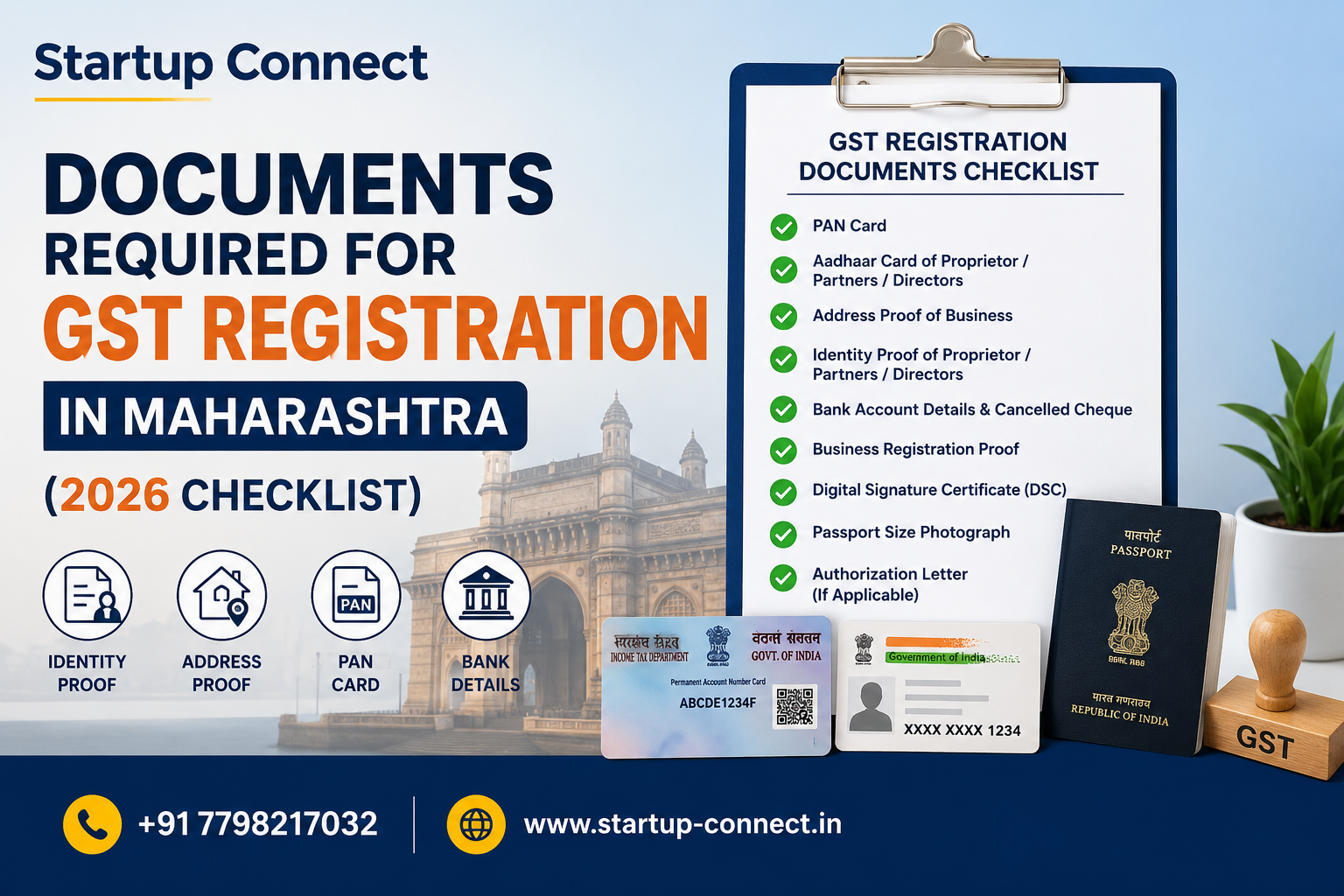
One of the best parts of Udyam Registration is how minimal the documentation is. Here’s what you’ll need:
No physical document upload is required at the time of registration the portal verifies details digitally against your PAN and GST records.
Here’s how the registration actually works on the official portal:
If any detail mismatches your PAN or GST records, the application can get stuck in verification this is the most common reason founders reach out for professional help partway through.

Udyam Registration isn’t just a formality it comes with tangible advantages:
Together, these MSME benefits for small businesses can meaningfully lower operating costs and improve access to capital especially in the first few years of operation.
At Startup Connect, we handle the entire Udyam Registration process for you, from verifying your PAN, GST, and Aadhaar details before submission to selecting the correct NIC code and business classification, so your application goes through without rejection or delay. We also help you understand which MSME schemes and subsidies your business qualifies for once registered, and can pair it with services like GST registration or company registration if you’re setting up from scratch.
If you’ve been putting off Udyam Registration because the process feels confusing, you don’t have to figure it out alone reach out to Startup Connect and we’ll get your MSME registration done right, the first time.
It’s not legally mandatory, but without it your business cannot access MSME benefits like collateral-free loans, delayed payment protection, or government tender eligibility. Most banks and government departments now ask for Udyam Registration as proof of MSME status.
If your PAN, Aadhaar, and GST details are accurate and match, Udyam Registration is usually completed the same day, with the certificate generated instantly online.
No. Udyam Registration on the official government portal is completely free. Be cautious of third-party sites that charge a “registration fee” that’s a common scam targeting new business owners.
Yes. You can update your Udyam Registration details such as turnover, investment figures, or business activity anytime through the same portal using your Udyam Registration Number.
Not always. GSTIN is required only if your business falls under a category where GST registration is mandatory. Businesses exempt from GST can still complete Udyam Registration using PAN and Aadhaar alone.
Udyog Aadhaar was the older MSME registration system, discontinued in 2020. Udyam Registration replaced it with a more streamlined, PAN- and GST-linked process, and all existing Udyog Aadhaar holders were required to re-register under Udyam.
No, Udyam Registration doesn’t expire and doesn’t require renewal. However, you should keep your turnover and investment details updated annually to remain in the correct enterprise category.
Join our Newsletter to see latest Information

© 2025 Startup Connect. All Rights Reserved
Startup Connect is your trusted partner for business growth, offering Business Certifications, digital marketing, and branding solutions to help startups and enterprises scale faster.