Startupindia Registration


Starting a business is already challenging, and government registrations often make things more confusing. One such process is DPIIT/ startup india registration under the Startup India initiative. While the benefits are attractive—such as government recognition, funding opportunities, and tax exemptions—many startups face rejection or delays because of common mistakes during startup india / DPIIT registration.
This guide is written to help founders, co-founders, and startup teams understand where things usually go wrong and how to avoid those errors. No complicated legal language, no copied content—just simple explanations based on real-world experiences.
If you’re planning to apply or have already applied, this article can save you time, stress, and repeated corrections.
Before discussing common mistakes during DPIIT registration, let’s quickly understand what DPIIT registration means.
DPIIT (Department for Promotion of Industry and Internal Trade) is the government body that recognizes startups under the Startup India initiative. Once approved, your startup becomes officially recognized by the Government of India as a “Startup.”
This recognition helps with:
Access to government schemes
Angel and VC trust
Startup India benefits
Better credibility with banks and clients
However, DPIIT registration is not automatic. Your application is reviewed carefully, and that is where most mistakes happen.
Most founders are focused on product, sales, funding, or hiring. Registration is often done in a hurry or handled without expert guidance. This leads to avoidable errors.
Some startups / companies:
Apply without understanding eligibility
Upload wrong documents
Copy business descriptions from the internet
Assume approval is guaranteed
All these lead to rejection or long delays.
One of the most common mistakes during DPIIT registration is selecting the wrong entity type.
DPIIT allows only:
Private Limited Company
Limited Liability Partnership (LLP)
Registered Partnership Firm
Many applicants mistakenly apply using:
Sole proprietorship
Unregistered partnership
Individual business name
If your entity is not eligible, the application will be rejected immediately.
Tip:
Your entity type on the Startup India portal must exactly match your incorporation documents.
Even small mismatches can lead to rejection. This is one of the most ignored mistakes during DPIIT registration.
Common mismatches include:
Company name spelling difference
Wrong incorporation date
Incorrect CIN or LLPIN
Address mismatch with MCA records
Government systems verify your details automatically. Even a missing comma or extra space can cause issues.
Tip:
Always cross-check details with your Certificate of Incorporation before submitting.
This is one of the biggest reasons for rejection and the most critical among mistakes during DPIIT/ Startupindia registration.
Many startups write:
Generic descriptions
Copied content from other websites
One-line business explanations
DPIIT does NOT want marketing language. They want clarity.
Your business description should clearly explain:
What problem you are solving
How your solution is innovative or improved
How it can scale
Wrong example:
“We provide digital solutions and services to clients.”
Better example:
“We help small businesses automate customer communication using AI-based chat tools, reducing response time and cost.”
DPIIT registration is meant for startups, not regular trading businesses.
Another common mistake during DPIIT registration is failing to explain innovation.
Innovation does NOT always mean inventing new technology. It can be:
A new approach
Process improvement
Market innovation
Cost-efficient solution
If your startup looks like a normal service provider with no differentiation, DPIIT may reject it.
Tip:
Highlight what makes your business different from traditional models.
Documentation errors are among the most common mistakes during DPIIT registration.
Common document mistakes:
Wrong Certificate of Incorporation
Missing PAN of entity
Incorrect authorization letter
Blurry or unreadable files
Each uploaded document must be clear, correct, and relevant.
Tip:
Upload documents in proper format and readable quality. Don’t upload unnecessary files.
Many startups submit an authorization letter, but in the wrong format.
Problems include:
Missing company letterhead
Not signed by authorized director/partner
No company seal
Incorrect wording
This may look like a small thing, but it can cause rejection.
Tip:
Authorization letter should clearly authorize one person to apply on behalf of the entity.
Another major reason for rejection is ignoring eligibility rules. This is one of the most serious common mistakes during DPIIT registration.
Your startup must:
Be less than 10 years old
Have turnover below prescribed limits
Be working towards innovation or improvement
If your company does not meet these conditions, DPIIT approval is not possible.
Tip:
Eligibility check should be the first step before applying.
Founder information must be accurate and verifiable.
Common issues include:
Wrong email ID
Incorrect DIN
Name mismatch with PAN or Aadhaar
Old mobile number
These details are often used for verification and communication.
Tip:
Update founder details carefully and avoid guesswork.
Many founders believe DPIIT registration is just a formality. This mindset leads to careless submission.
This expectation itself becomes one of the common mistakes during DPIIT registration.
DPIIT applications are reviewed manually, and unclear submissions are rejected without negotiation.
Tip:
Treat DPIIT registration as a formal government approval, not a routine signup.
Some startups think their job ends after approval. That’s another mistake.
Post-registration issues include:
Not updating changes
Misusing Startup recognition
Applying for benefits without compliance
This can affect future benefits like tax exemption or funding.
Tip:
Maintain compliance even after DPIIT approval.
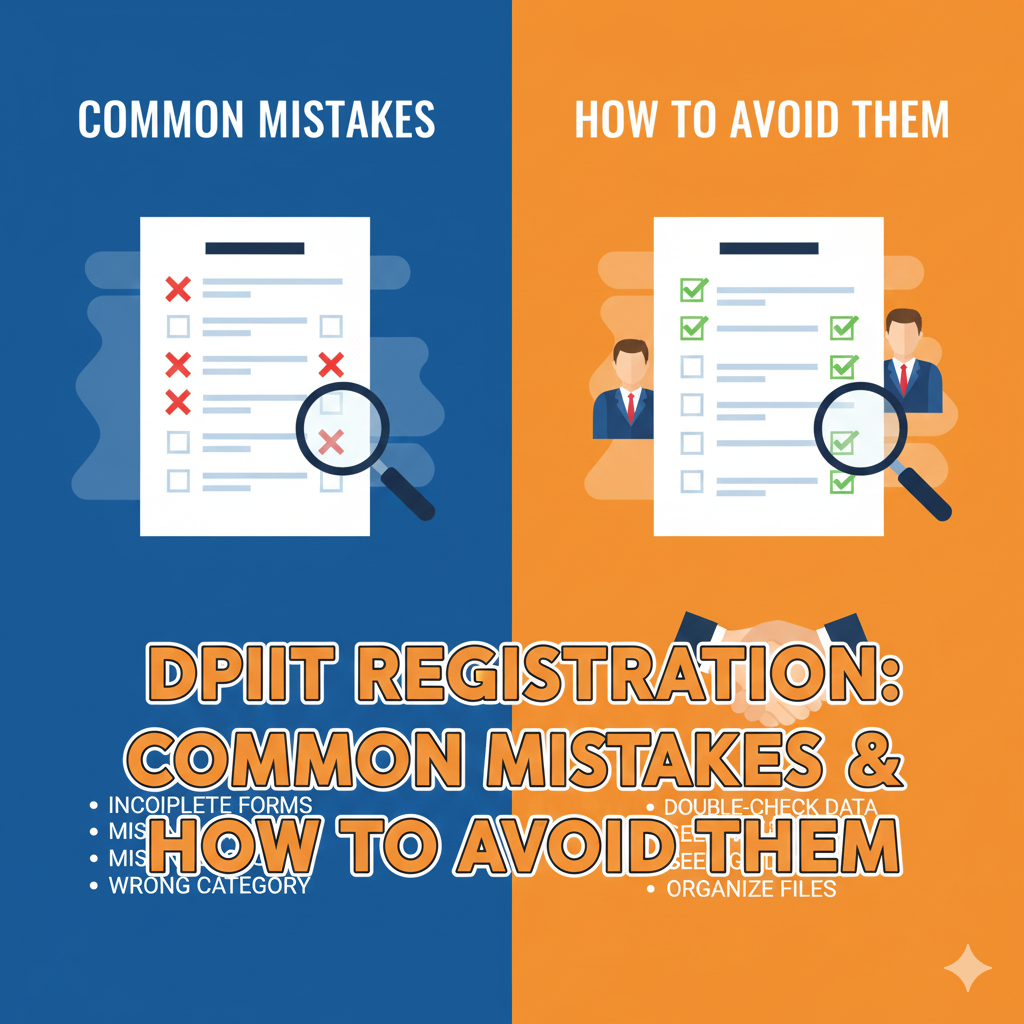
The best way to avoid common mistakes during DPIIT registration is proper planning and clarity.
Key points to remember:
Don’t rush the application
Avoid copied content
Double-check details
Focus on innovation explanation
Follow document formats
Expert guidance can save days or even weeks of delays. You can get help from trusted business consultants Like Startup Connect
Doing DPIIT registration the right way helps you:
Build trust with investors
Get government recognition
Access startup benefits
Strengthen brand credibility
A rejected application wastes time and creates confusion, especially for new founders.
The most common mistakes during DPIIT registration include wrong business details, poor business description, incorrect documents, and not meeting eligibility criteria.
Yes, DPIIT registration can be rejected if the application contains incorrect information, lacks innovation, or does not meet eligibility requirements.
Yes, innovation or improvement is important. DPIIT looks for startups offering new solutions or better processes.
Yes, service-based startups can apply, but they must clearly explain innovation or improvement in their service model.
Approval time varies. If documents and details are correct, it usually takes a few working days. Errors can cause delays.
Yes, you can reapply after correcting the mistakes mentioned in the rejection feedback.
Join our Newsletter to see latest Information

© 2025 Startup Connect. All Rights Reserved
Startup Connect is your trusted partner for business growth, offering Business Certifications, digital marketing, and branding solutions to help startups and enterprises scale faster.